How evaporation boats work
Mar 09, 2022
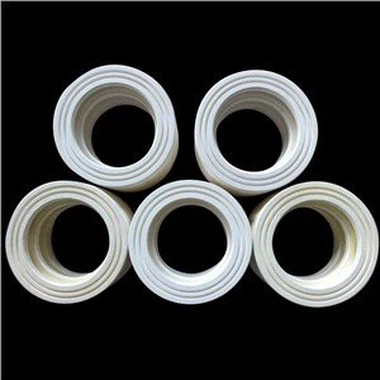
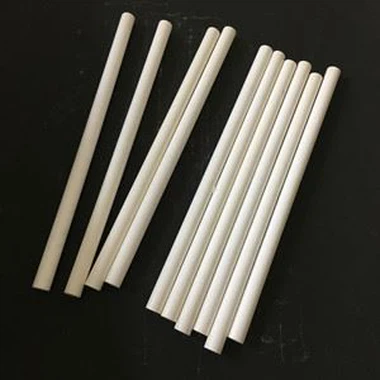
Evaporation boats are ceramic components that act as receptacles for the metal (pure aluminum) to be evaporated. They function as electrical resistance heatersthe evaporation boat and a continuously fed aluminum wire are heated under high vacuum by current flow, so that the wire first melts and then evaporates. Due to special surface structuring and texture, a molten bath is formed and optimally distributed over the boat, thereby ensuring a homogeneous cloud of vapor. The metal vapor is then deposited on a substrate located above the vapor cloud.
Materials for evaporation boats
There are various requirements that evaporation boats must meet. For the principle of resistance heating to work, they must be electrically conductive; at the same time, they need a sufficiently high degree of electric resistance to make heating them possible at all. Furthermore, they must be resistant to high temperatures and inert towards molten metal. To combine these properties, mixed ceramics are made from two or three components.
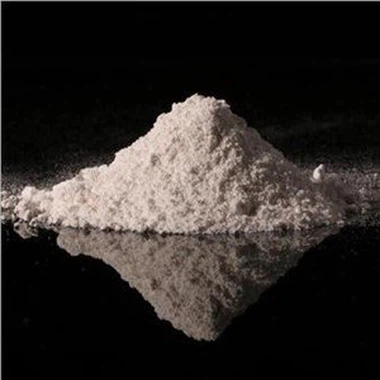
Two-component evaporation boats contain titanium diboride and BORON NITRIDE. Due to its bonding structure, titanium diboride offers excellent resistance to high temperatures and remains inert even to non-ferrous metal melts. It also improves the wettability of the evaporation boat through liquid aluminum and ensures a melting bath with an extensive surface. For example, when used for aluminum vapor deposition, it’s completely wetted by liquid aluminum. In addition, titanium diboride is a very good electrical conductor. Boron nitride is added as a non-conductive material to set the electrical resistance of the evaporation boat.
Three-component mixed ceramics also include aluminum nitride. This material has very good thermal conductivity which makes it particularly suitable for large evaporation boats to ensure they heat up quickly and uniformly. Compared to two-component evaporation boats, the three-component versions have a shorter lifespan, with lower evaporation rates and less corrosion resistance. At the same time, the wettability of the evaporator is significantly improved and there’s greater homogeneity of the vapor-deposited layers. Three-component evaporators are therefore primarily used in the manufacture of capacitors, since this requires a particularly high level of homogeneity in the coatings.