

Evaporation boats are ceramic components that act as receptacles for the metal (pure aluminum) to be evaporated. They function as electrical resistance heatersthe evaporation boat and a continuously fed aluminum wire are heated under high vacuum by current flow, so that the wire first melts and then evaporates.
Advantages of Evaporation Boat
Evaporation boats offer several advantages in thin film deposition processes. They provide a controlled environment for the evaporation of materials, ensuring precise control over film thickness and uniformity. Evaporation boats can withstand high temperatures and provide efficient heat transfer, allowing for consistent evaporation rates. They are available in various sizes and shapes, accommodating different evaporation systems and substrate configurations. Evaporation boats enable the deposition of a wide range of materials, including metals, semiconductors, and ceramics. They are easy to load and unload, facilitating quick material changes or process adjustments. Overall, evaporation boats are essential tools in thin film deposition techniques, offering versatility, reliability, and reproducibility.
-

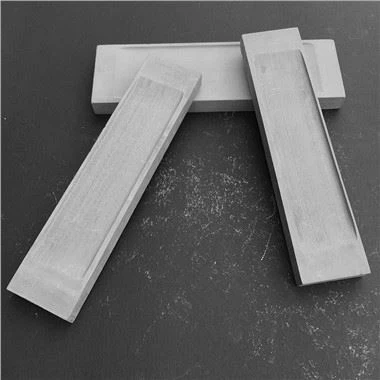
Boron Nitride Composite Ceramics Evaporation Boats
Evaporation boats are ceramic assemblies that serve as containers for the metal (such as aluminum wire) to be vaporized.
Add to Inquiry -
Three Component Composite Ceramic Evaporation Boat
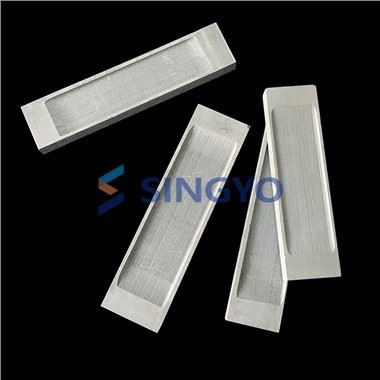
SINGYO evaporation boat is a three component vaporboat. It is made of boron nitride, titanium diboride and aluminum nitride in accordance with the appropriate proportion, through high temperature
Add to Inquiry -
Vacuum Evaporation Boat Composite Ceramic Crucible
Ceramic evaporation boat is the very good material for vacuum aluminizing strict requirements which has special electrical and thermal properties.
Add to Inquiry -
Evaporation Boat For Metallized Film
Ceramic evaporation boat is the very good material for vacuum aluminizing strict requirements which has special electrical and thermal properties.
Add to Inquiry -
Three component Ceramic Evaporation Boat
Evaporation boat is a vessel for evaporating metal and acts as a resistance heater.
Add to Inquiry -
Conductive Composite Ceramic Evaporation Boat
Our composite evaporation boats are high-efficiency and high-performance evaporation designed for metallization applications.
Add to Inquiry -
Boron Nitride Composite Ceramic Evaporation Boat
Ceramic evaporation boat is the very good material for vacuum aluminizing.
Add to Inquiry -
Conductive Ceramic Evaporation Boat
Our company is committed to the research and production of conductive ceramic evaporation boat.
Add to Inquiry -
Ceramic Evaporation Boat for Metallizing Film
Ceramic Evaporation Boat is widely used in the vacuum evaporation packaging materials, capacitor metal vacuum coating film, paper, aluminum plating, bronzing coating, anti-counterfeit labels such as
Add to Inquiry -
Ceramic Evaporation Boat for Metallization
Ceramic Evaporation boat is used for vacuum alumium metallizing.
Add to Inquiry -
Special-Shaped Evaporation Boat
We can supply you with different shapes of ceramic evaporation boats, such as U-vap,T-vap boats and composite ceramics crucibles.
Add to Inquiry





Why Choose Us
Rich experience
We have rich experience in special ceramics industry and metalizing applications.
High technology
It is a high-tech enterprise specializing in development and production of ceramic evaporation boats and boron nitride products.
Convenience location
Our company is located in zibo city,shandong province, it enjoys an advantageous geographical location and convenient transportation.
Market experiences
With years of market experiences, we have established long-term and stable cooperative relations with many domestic and abroad customers.
Types of Evaporation Boat

Tungsten evaporation boats
Tungsten is highly corrosion-resistant compared with many molten metals and, with the highest melting point of all metals, is extremely heat-resistant. We make the material even more corrosion-resistant and dimensionally stable by means of special dopants such as potassium silicate.

Molybdenum evaporation boats
Molybdenum is a particularly stable metal and is also suitable for high temperatures. Doped with lanthanum oxide (ml), molybdenum is even more ductile and corrosion-resistant. We add yttrium oxide (my) to improve the mechanical workability of molybdenum

Tantalum evaporation boats
Tantalum has a very low vapor pressure and a low evaporation speed. What is most impressive about this material, however, is its high corrosion resistance.
Materials for Evaporation Boats
There are various requirements that evaporation boats must meet. For the principle of resistance heating to work, they must be electrically conductive; at the same time, they need a sufficiently high degree of electric resistance to make heating them possible at all. Furthermore, they must be resistant to high temperatures and inert towards molten metal. To combine these properties, mixed ceramics are made from two or three components.
Two-component evaporation boats contain titanium diboride and BORON NITRIDE. Due to its bonding structure, titanium diboride offers excellent resistance to high temperatures and remains inert even to non-ferrous metal melts. It also improves the wettability of the evaporation boat through liquid aluminum and ensures a melting bath with an extensive surface. For example, when used for aluminum vapor deposition, it's completely wetted by liquid aluminum. In addition, titanium diboride is a very good electrical conductor. Boron nitride is added as a non-conductive material to set the electrical resistance of the evaporation boat.
Three-component mixed ceramics also include aluminum nitride. This material has very good thermal conductivity which makes it particularly suitable for large evaporation boats to ensure they heat up quickly and uniformly. Compared to two-component evaporation boats, the three-component versions have a shorter lifespan, with lower evaporation rates and less corrosion resistance. At the same time, the wettability of the evaporator is significantly improved and there's greater homogeneity of the vapor-deposited layers. Three-component evaporators are therefore primarily used in the manufacture of capacitors, since this requires a particularly high level of homogeneity in the coatings.
Application of Evaporation Boat
Semiconductor manufacturing
Evaporation boats are widely employed in semiconductor manufacturing for thin-film deposition processes. They play a crucial role in depositing materials like silicon dioxide, metal layers, and other semiconductor components onto silicon wafers. The boats' high melting point and excellent thermal conductivity enable precise and uniform film deposition, contributing to the production of advanced microelectronics.
Optical coating
Mo boats are used in optical coating applications, where thin films of materials with specific optical properties are deposited onto lenses, mirrors, or other optical components. These coatings enhance light transmission, reduce reflections, and provide anti-scratch or anti-reflective properties. Evaporation boats' resistance to high temperatures and chemical stability make them ideal vessels for these precise optical coating processes.
Solar cell production
In the manufacture of solar cells and photovoltaic devices, evaporation boats are employed to deposit various layers of thin-film materials onto substrates. These layers can include absorber materials like cadmium telluride (cdte) or copper indium gallium selenide (cigs), which convert sunlight into electricity. Evaporation boats' ability to handle the high-temperature requirements of these processes is vital for efficient solar cell production.
Thin-film deposition for electronics
These boats are also used in the electronics industry for depositing thin films onto electronic components, such as integrated circuits and microchips. This ensures the precise fabrication of electronic devices and components, where even nanoscale variations can impact performance. Molybdenum's thermal properties enable the controlled deposition of these crucial thin films.
Materials research
Evaporation boats are indispensable tools in materials research laboratories. Scientists use them for physical vapor deposition (pvd) experiments to deposit thin films of various materials onto substrates. These experiments help researchers understand material properties, develop new coatings, and advance knowledge in fields like surface science and nanotechnology.
Equipment and Materials Needed for Thermal Evaporation
To perform thermal evaporation, you will need special equipment designed for this purpose. Here are the five key components
Evaporation source
This is where the material to be evaporated is placed. There are different types of evaporation sources, like evaporation boats and crucibles, depending on the material and how fast you want to evaporate it.
Vacuum chamber
The vacuum chamber creates a low-pressure environment, which is necessary for thermal evaporation. It should be able to reach high vacuum levels to keep the deposition process clean.
Heating system
The heating system heats up the material so that it evaporates. The method used depends on the material and its specific requirements.
Substrate holder
The substrate holder holds the surface on which the thin film will be deposited. It should be designed to fit different substrate sizes and allow for precise temperature control.
Power supply
The power supply provides electrical power to the heating system, controlling the heating rate and maintaining a stable temperature.
Choosing the right materials is important for successful thermal evaporation. Common materials used include metals, metal oxides, semiconductors, and organic compounds. Now that we have covered the equipment and materials, let's look at the step-by-step guide to the thermal evaporation process.
Thermal evaporation uses heat to turn a solid material into gas. This gas forms a thin film on a substrate when it cools down. The temperature needed for evaporation depends on the material's properties, like its melting point. Different materials need different heating methods to evaporate properly. Knowing your material's requirements is important for successful thermal evaporation.
Other factors, like the temperature of the substrate, the angle of deposition, and the chamber pressure, affect how fast the film forms and its quality. Adjusting these factors lets you control the thickness, adhesion, and structure of the film. Sometimes, you need to experiment to get the film you want.
There Are 5 Basic Steps in the Production of Evaporation Boats
Preparing the powders
First of all, the powder particles are brought down to the desired size through milling.
Blending of the raw materials
The powders are mixed together in the desired ratio and blended thoroughly for the sake of uniformity in the raw material.
Hot-pressing
The blended raw material is then hot-pressed at a very high temperature (More than 1500⁰C) with a pressure of more than 150 tons. This delivers a big block of ceramic.
Machining
The hot-pressed ceramic block is then cut into boats with a diamond cutter. Each boat is ground for a smooth finish and dimensional accuracy. A cavity is ground into each boat.
Quality control
Each and every boat is measured for resistivity. After final inspection, boats are packed for shipping.
How to Extend the Service Life of the Evaporation Boat
Initial heating of the new boats also called “break in” must always be slow to get proper life from Boats. Reason? New boats will always have some absorbed moisture. If the boat is heated quickly in this condition, the moisture, converted into steam having much higher volume
Will have little time to escape and can cause cracks because of high pressure build up.
At the end of the cycle it must be ensured that all the Aluminum or any other metal being metalized has evaporated completely before heating is switched off. Otherwise residual metal will seep into the pores of boats; now differential cooling rates of boat and metal will crack the boat.
Care must be exercised that before the vacuum is broken, boats must have cooled down. This is because sudden contact with cold air can cause boat breakage. About 5 minutes is enough for boats to cool down.
Worn out copper clamps also are a big reason for boats not performing to their full capacity. Non uniform wear of clamp causes sparking between clamp and boat; this overheats and cracks the boat.
A good quality graphite foil is very important factor in enhancing the life of Boat. To save money, sometimes Metalizers use poor quality plumbing grade graphite foil. This foil contains many impurities and binders and offers resistance to the flow of current. This causes the ends of boat to overheat and break. Supervac supplies 100% pure graphite foil free of binders. This is made with the patented process of Exfoliation. This foil gives you the following outstanding benefits –
A) Offers no resistance to the flow of current.
B) Saves costly power.
C) Enhances the life of Boats.
There is one more major factor inter linking the life of evaporation boat with graphite foil. Good quality graphite foil has good compressibility. This allows a proper electrical contact in boats and clamp before heating begins and expansion of boats in heated condition. Poor quality graphite foil on the other hand will not allow expansion of boats in heated condition putting additional stress and subsequent breakage of boats.
Aluminum of purity 99% or more is required to avoid premature cracking. Impure aluminum will have impurities which will have different boiling temperatures; this will lead to an unstable pool of metal in boat cavity. This in turn results in non uniform heating of Evaporation Boat leading to thermal stress and breakage.
Age of aluminum wire also affects boat life. With age, aluminum oxidizes and Aluminum oxide thus formed causes spitting and excessive heating of Boats. Freshly made or “cleaned” wire works best.
Hardness of Aluminum should be maintained in proper range if required by tempering as a very hard wire is likely to puncture the boats.
Aluminum wire should be fed in such a way that it meets boat in the center widthwise and in between 1/3 to ½ lengthwise. This ensures proper pool formation and increases the life of boats. (I have written a blog post entirely on this topic in the past. You can read it here.)
What Are the Key Aspects to Keep in Mind Before Buying an Evaporation Boat?
Resistivity
A boat with low resistivity will easily let the current flow through it and therefore will not heat up. On the other hand, the highest resistivity is limited by the power supply of the device. Therefore, it is best if the boat has an optimal resistivity so that it can be heated slowly, allowing the aluminum to melt on it and form an even coating.
Wettability of the boat
This is a measure of how the molten metal (aluminum in most cases) behaves when it comes in contact with the ceramic boat. The better the wettability of the boat, the higher the quality of the coating. Impurities in the evaporation boat can lead to poor wetting. When the evaporation boat is not wetted properly, we face problems such as uneven spreading of the molten metal, puddles, splashing, etc. While high wettability is desirable, it comes at the expense of the life of the evaporation boat.
Corrosion resistance
When aluminum liquefies on the boat, it starts to react with the boron nitride in the boat to form aluminum nitride and boride compounds, which corrode the boat. Over time, cracks, grooves, and fissures form on the surface of the boat, leading to premature failure of the boat. But if the boat is made just for corrosion resistance, it will hamper wettability.
2-Component boats/3-component boats
Ceramic evaporation boats are of two types: 2-component boats and 3-component boats. 2-component boats are made of boron nitride and titanium diboride. 3-component boats are also available with boron nitride, titanium diboride and aluminum nitride for lower cost
Life on board
The importance of long life of the evaporation boat and uniformity of coating cannot be overemphasized. Good quality evaporation boat components not only resist corrosion but also allow for smooth and uniform spread of the molten metal
Price
It makes absolutely no sense to sacrifice the life of the evaporation boat and coating quality for a low-priced evaporation boat. While you may feel happy because you have saved some evaporation boat cost, you may actually have to pay a huge electricity bill. The machine downtime and the overall cost of the evaporation boat will also go up. On the contrary, it does not make economic sense to buy a very expensive evaporation boat.
Ease of use
For roll-to-roll coaters, the continuity and ease of use of the evaporation boat is a must. Otherwise, it will lead to a large inventory backlog and a capital freeze of lakhs of rupees. It is well known that a shortage of evaporation boats can bring the entire operation to a standstill.
Short Supplier Lead Times
Due to the potentially long lead times from suppliers, equipment operators are often forced to place large orders for evaporation boats months in advance. This can feel like a dagger hanging over the operator’s head, to say the least. It makes sense for a business if your evaporation boat supplier has a short lead time. This way, you won’t have to wait as long to receive your next batch of evaporation boats.
FAQ
Q: What is evaporation tank used for?
Q: What is evaporation in the water cycle?
Q: What is evaporation coating?
Q: What are the advantages of using evaporation boats?
Q: What are the common materials used for evaporating crucibles?
Q: What is the typical lifespan of an evaporation boat?
Q: What are the advantages of using evaporating crucibles?
Q: Can evaporation boats be reused?
Q: How should evaporating crucibles be handled and maintained?
Q: How should evaporating crucibles be handled and maintained?
Q: How do you select the appropriate evaporation boat material?
