

Silicon carbide (SiC), also known as corundum, is a hard compound containing silicon and carbon. It is a semiconductor that occurs naturally in the form of the extremely rare mineral moissanite, but has been produced in large quantities in powder and crystal form since 1893 for use as an abrasive. Silicon carbide particles can be bonded together by sintering to form a very hard ceramic that is widely used in applications requiring high durability, such as ceramic plates for car brakes, car clutches, and bulletproof vests. Large single crystals of silicon carbide can be grown by the Lely process, and they can be cut into a gemstone called synthetic moissanite.
Advantages of Silicon Carbide
Excellent high-temperature performance
The melting point of silicon carbide products is as high as 2700°C, which can maintain its structural stability and strength in high-temperature environments, so it is widely used in high-temperature molten metals, high-temperature heating furnaces, high-temperature petrochemical and other fields.
Strong corrosion resistance
Silicon carbide has excellent corrosion resistance and can work stably for a long time in acid, alkali and oxidative environments.
High hardness and high strength
Silicon carbide has higher hardness and strength than traditional ceramic materials, so it has good wear resistance and impact resistance.
Excellent thermal conductivity and electrical conductivity
Silicon carbide has high thermal conductivity and excellent electrical conductivity, so it is widely used in the manufacture of high-power electronic components and radiators.
-

Silicon carbide cyclone is an important solid-liquid separation equipment, its main purpose is to separate the impurities, sediment and solid particles and other substances in the water, so as to
Add to Inquiry -
Silicon Carbide Wear Resistant Pad
Silicon carbide wear pad is a high-performance wear-resistant material widely used in various industrial fields. Its main purpose is to serve as a contact surface for abrasive materials to protect
Add to Inquiry -
Application: Silicon carbide bulletproof plates are small in density and light in weight, and have obvious advantages in bulletproof equipment for military personnel. They are mostly used for the
Add to Inquiry -
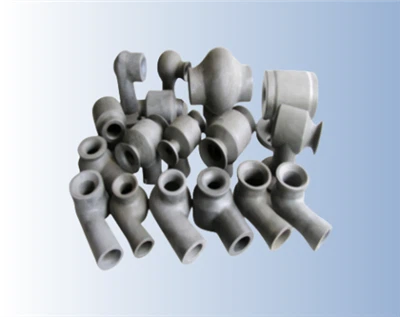
THERMAL POWER PLANT DESULFURIZATION SERIES
Applications: Silicon carbide desulfurization nozzles are used in the desulfurization of electric power plants to remove the sulfur dioxide and other pollutants from the flue gas in electric power
Add to Inquiry -
Applications: ICP etching process for epitaxial layer thin film materials (GaN, SiO2, etc.) for LED wafer cores, semiconductor diffusion using precision ceramic parts, and MOCVD epitaxial process for
Add to Inquiry -
SILICON CARBIDE CANTILEVER SLURRY
Application Areas: In diffusion furnaces and high-temperature oxidation diffusion furnaces used in the semiconductor manufacturing industry to perform thermal growth and oxidation of silicon wafers,
Add to Inquiry -
SILICON CARBIDE GRINDING BARREL
Applications: Silicon carbide grinding hopper mills have unique advantages in high purity and ultra-fine material processing, corrosion-resistant grinding media processing. At present, lithium
Add to Inquiry -
Application Areas: Mechanical carriers for photovoltaic semiconductors in thermochemical processes. Biotek Silicon Carbide Brackets are made of high purity polysilicon, with raw material purity ≥4N,
Add to Inquiry -
Application areas: roller kiln lithium battery positive and negative materials transfer, magnetic materials, electronic ceramic powder, daily ceramics, refractory materials, such as transfer
Add to Inquiry -
Application areas: Swimming kiln, tunnel kiln, roller kiln and other industrial kiln bearing structure and kiln car bearing products. Silicon carbide square beam has the advantages of high
Add to Inquiry



Why Choose Us
Rich experience
We have rich experience in special ceramics industry and metalizing applications.
High technology
It is a high-tech enterprise specializing in development and production of ceramic evaporation boats and boron nitride products.
Convenience location
Our company is located in zibo city,shandong province, it enjoys an advantageous geographical location and convenient transportation.
Market experiences
With years of market experiences, we have established long-term and stable cooperative relations with many domestic and abroad customers.
Types of Silicon Carbide


Silicon carbide powder
Silicon carbide powder is a commonly used abrasive material. Silicon carbide powder can be produced by reacting and pyrolyzing vaporized polysiloxanes in a single heating step, which produces silicon carbide powder. This process is straightforward and inexpensive. This method basically involves introducing a vaporized polysiloxane into a reaction chamber. The polysiloxane vapor is then made to react at a temperature of about 2900° f for a period of time sufficient to convert the polysiloxane vapor into silicon carbide powder, which is then collected.
Silicon carbide powder
Silicon carbide powders are particularly used as abrasive materials for abrasive machining processes such as grinding, water-jet cutting, and sandblasting. Silicon carbide powders serve as grinding powders for fine grinding or rough polishing semiconductors, ceramics, and ferrous materials. It can also be used for shaping, honing, and polishing other materials.
Silicon carbide sandpaper
Another common application of silicon carbide is in wet and dry sanding. This includes automotive polishing, as well as polishing stone and marble. In more coarse grits, the abrasive is ideal for removing rust, deburring metal and glass, refinishing wood flooring, etc.
Silicon carbide sandpaper sheet
Silicon carbide sandpaper is actually the hardest and sharpest abrasive commonly used in many applications. However, it lacks durability due to its brittleness, and its narrow particle size wears down faster. The grains are razor-sharp, making them ideal for sanding metal, marble, glass, stone, cork, medium-density fiberboard, and plastic using minimal pressure application.
Silicon carbide grinding wheel
Grinding wheels consist of abrasive compounds, which are used for various grinding and abrasive machining operations in grinding machines. Most grinding wheels are made with composite materials. Silicon carbide grinding wheel is another common application of the fast-cutting silicon carbide material. It is used for non-ferrous metals. It has very sharp abrasive grains and is typically recommended for grinding relatively soft metals like aluminum or cast iron. It can also be utilized for grinding extremely hard materials like cemented carbide. For instance, a green silicon carbide grinding wheel is a type of bonded abrasive that uses green silicon carbide grain materials and vitrified or resinoid bonds to form certain shapes. Green silicon carbide grinding wheels are mostly used on carbides. Black silicon carbide, on the other hand, is used for machining materials like stone, plastics, etc. These wheels can be run with or without coolant.
Silicon carbide sharpening stone
A common application of silicon carbide sharpening stone is for the sharpening of knives made from hard stainless steel. Silicon carbide sharpening stone cuts aggressively. Usually, silicon carbide stones do come in a coarser grit and are suitable for the initial coarse sharpening. Silicon carbide stones have been shown to have a mohs hardness of 9-10. Silicon carbide sharpening stones can be used with either water or oil. Oil stones, for instance, can be made from different types of materials, which are novaculite, aluminum oxide, and silicon carbide, but the fastest cutting oil stones are silicon carbide stones. When using water with the stones, it helps to have some dish soap mixed with it, so it doesn't just soak into the pores immediately.
Application of Silicon Carbide
There are many uses of silicon carbide in different industries. Its physical hardness makes it ideal to be used in abrasive machining processes like grinding, honing, sand blasting and water jet cutting.
The ability of silicon carbide to withstand very high temperatures without breaking or distorting is used in the manufacture of ceramic brake discs for sports cars. It is also used in bulletproof vests as an armor material and as a seal ring material for pump shaft sealing where it frequently runs at high speed in contact with a similar silicon carbide seal. One of the major advantages in these applications being the high thermal conductivity of silicon carbide which is able to dissipate the frictional heat generated at a rubbing interface.
The high surface hardness of the material lead to it being used in many engineering applications where a high degree of sliding, erosive and corrosive wear resistance is required. Typically this can be in components used in pumps or for example as valves in oilfield applications where conventional metal components would display excessive wear rates that would lead to rapid failures.
The unique electrical properties of the compound as a semiconductor make it ideal for manufacturing ultra fast and high voltage light emitting diodes, mosfets and thyristors for high power switching.
The material's low thermal expansion coefficient, hardness, rigidity and thermal conductivity make it an ideal mirror material for astronomical telescopes. Silicon carbide fibers, known as filaments are used to measure gas temperatures in an optical technique called thin filament pyrometry.
It is also used in heating elements where extremely high temperatures need to be accommodated. It is even used in nuclear power to provide structural supports in high temperature gas cooled reactors.
Process of Silicon Carbide
Powder preparation
Silicon carbide (sic) is a compound of silicon and carbon with a chemical formula of sic. The simplest manufacturing process for producing silicon carbide is to combine silica sand and carbon in an acheson graphite electric resistance furnace at a high temperature, between 1600°c (2910°f) and 2500°c (4530°f). Fine silicon particles can be converted to silicon carbide (sic) by heating in the excess carbon from the organic material. The silica fume, which is a byproduct of producing silicon metal and ferrosilicon alloys, also can be converted to sic by heating it with graphite at 1500°c (2730°f). The material formed in the acheson furnace varies in purity. The silicon carbide “stones” and grains are turned into a fine powder by crushing, and then purified with halogens.
Kneading
The fine grain (sub-micron) powder is then homogeneously mixed with non-oxide sintering aids (a binder) to form a paste. Different binders including organosilicon binders may be used.
Shape forming
The resulting pasty mixture may be compacted and shaped either by extrusion or by cold isostatic pressing.
Extrusion consists in forcing the pasty mixture through a die with an opening. Silicon carbide tubes are produced through extrusion. The properties in the extrusion direction differ from the properties in other directions.
Cold isostatic pressing is the powder compaction method conducted at room temperature, and it involves applying pressure from multiple directions through a liquid medium surrounding the compacted part. A flexible mold immersed in a pressurized liquid medium is used. Materials with a uniform anisotropic structure are prepared using an isostatic pressing method. The materials used to produce silicon carbide plates and blocks are manufactured by cold isostatic pressing.
Computer numerical control (cnc) machining
Cnc machining is used to machine the surface of the plates or drill the holes on process and services sides in the cylindrical blocks. Due to the very low mechanical strength of the green material, special care is required here. With the help of unique fixture, the components are turned, milled, and drilled according to specific machining parameters.
Sintering
Following the forming stage, the material is sintered in an inert atmosphere at temperatures up to 2300°c (4170°f). During the sintering process, and more precisely between approximately 1900°c (3450°f) and 2150°c (3900°f), the products shrink isostatically by a factor of roughly 20%. The block height, diameter and hole diameters all shrink by roughly 20%. The tube diameter, wall thickness and length also shrink.
Silicon carbide structure
Silicon carbide is the second hardest material on earth and is nearly impossible to machine. It has very high thermal conductivity.
Lapping or grinding
If required, the sintered silicon carbide parts can then be machined to precise tolerances using a very costly range of precision diamond grinding or lapping techniques.
Quality checks
The finished silicon carbide parts go through a series of dimensional checks, tests and inspections (leak detection, crack detection, pressure testing, etc…). Mechanical properties are carefully checked and monitored after each production batch.
How to Distinguish Between Different Forms of Sic?
Manufacturing process
Rb-sic: This form of sic is produced by infiltrating molten silicon into a porous carbon preform. The reaction between the silicon and carbon forms silicon carbide.Ssic: Ssic is created by sintering or densifying a mixture of silicon carbide powder and additives at high temperatures. The process forms a solid ceramic material.Rsic: Rsic is produced through a process known as chemical vapor infiltration. In this method, silicon carbide is deposited on a porous carbon preform using chemical reactions.
Microstructure:Rb-sic
Rb-sic has a two-phase microstructure, consisting of silicon carbide and residual silicon.Ssic: Ssic has a homogeneous microstructure, with densely packed silicon carbide grains.Rsic: Rsic has a single-crystal or coarse-grained microstructure, depending on the manufacturing process.
Density and porosity
Rb-sic: Rb-sic generally has a higher porosity compared to ssic and rsic, resulting in lower density.Ssic: Ssic has higher density due to the densification process during sintering.Rsic: Rsic can have varying porosity levels depending on the desired application, but it is generally less porous compared to rb-sic.
Mechanical properties:Rb-sic
Rb-sic exhibits good strength and thermal shock resistance but may have lower mechanical properties due to the presence of residual silicon.Ssic: Ssic offers excellent mechanical properties, including high strength, hardness, and wear resistance. It also has good thermal conductivity.Rsic: Rsic has good mechanical strength, high-temperature stability, and excellent oxidation resistance.
Applications:Rb-sic
Rb-sic is commonly used in applications where thermal shock resistance is important, such as kiln furniture, burner nozzles, and heat exchangers.Ssic: Ssic is preferred in applications requiring high wear resistance and mechanical strength, including mechanical seals, bearings, and cutting tools.Rsic: Rsic is often used in applications requiring high-temperature stability and resistance to corrosive environments, such as semiconductor processing equipment and furnace components.
Thermal conductivity
Rb-sic: Rb-sic has relatively lower thermal conductivity compared to ssic and rsic, primarily due to the presence of residual silicon.Ssic: Ssic exhibits high thermal conductivity, making it suitable for applications requiring efficient heat transfer.Rsic: Rsic typically has moderate to high thermal conductivity, depending on the specific manufacturing process and porosity.
Thermal expansion
Rb-sic: Rb-sic has a lower coefficient of thermal expansion (cte) compared to ssic and rsic.Ssic: Ssic has a relatively higher cte compared to rb-sic and rsic.Rsic: Rsic exhibits a higher cte compared to rb-sic but generally lower than ssic.
Thermal shock resistance
Rb-sic: Rb-sic demonstrates good thermal shock resistance due to its lower thermal conductivity and higher porosity.Ssic: Ssic has good thermal shock resistance, allowing it to withstand rapid temperature changes.Rsic: Rsic also possesses good thermal shock resistance, making it suitable for high-temperature applications.
Maximum operating temperature
Rb-sic: Rb-sic can typically withstand temperatures up to around 1500°c (2732°f).Ssic: Ssic has a higher maximum operating temperature compared to rb-sic and can withstand temperatures up to approximately 1600°c (2912°f).Rsic: Rsic exhibits excellent high-temperature stability and can endure temperatures exceeding 1600°c (2912°f) depending on the specific grade.
FAQ
Q: What is silicon carbide used for?
Q: Is silicon carbide a metal or ceramic?
Q: What is silicon carbide best for?
Q: What is the common name for silicon carbide?
Q: What is the difference between silicon and silicon carbide?
Q: Does Tesla use silicon carbide?
Q: How strong is silicon carbide?
Q: Is silicon carbide expensive?
Q: What is similar to silicon carbide?
Q: Is silicon carbide stronger than diamond?
Q: Is silicon carbide durable?
Q: Who uses silicon carbide?
Q: Does silicon carbide dissolve in water?
Q: What is the raw material of silicon carbide?
Q: What is the benefit of silicon carbide?
Q: Why is SiC better than Si?
Q: Can you make silicon carbide?
Q: Is Tesla not using silicon carbide?
Q: Where is silicon carbide found?
Q: Is silicon carbide the future?
