Evaporation Boats Excel in Vacuum Furnaces
Apr 08, 2025
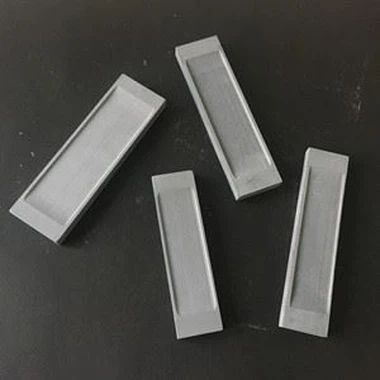
Evaporation boat is a vacuum furnace to achieve the core components of the material evaporation coating, its function is to carry the evaporation of materials and make it vaporized by heating, deposited in a vacuum environment to form a thin film. The following from the application scene, material properties, technical points and industry applications and other aspects of the detailed analysis of the evaporation boat in the vacuum furnace applications:
A core application scene
1. Thin film deposition and coating preparation vacuum furnace through the evaporation boat heating evaporated materials (metals, alloys, compounds, etc.), so that it is in a low-pressure environment, vaporization and deposition of the substrate surface, the formation of functional thin films, including: conductive / insulating film: Metal electrodes (Al, Cu, Au), transparent conductive film (ITO), insulating layer (SiO₂, SiNₓ), used in chip manufacturing, circuit boards, MEMS devices. Optical films: transmittance enhancement films (MgF₂), reflective films (Ag, Al), filter films (multilayer dielectric films), used in optical lenses, cell phone cameras, displays. Functional coatings: wear-resistant coatings (TiN, CrN), heat-insulating films (metal alloys), corrosion-resistant films (PTFE), used in automotive glass, cutting tools, aerospace components.
2. Material purification and modification of high-purity material separation: the use of different substances with different vapor pressure, through the evaporation boat heating to achieve the purification of rare earth elements (such as Nd, Dy), precious metals (Au, Pt). Surface doping treatment: evaporation of dopants (such as B, N) on the surface of semiconductor wafers or battery electrodes, to improve the electrical or optical properties of materials.
Second, the technical points and design requirements
1. Temperature control and uniformity of the evaporation boat by resistance heating or electron beam bombardment heating, need to set the temperature according to the material vapor pressure (such as Al evaporation temperature of about 1200 ℃, Au about 1400 ℃).
Boat body design (such as the depth of the groove, tilt angle) to ensure that the evaporation of the material is heated uniformly, to avoid local overheating caused by splashing or impurity volatilization.
2. Vacuum matching vacuum environment (usually 10-³ ~ 10-⁶ Pa) can reduce the boiling point of the material, improve the evaporation rate, while avoiding oxidation. Evaporation boat materials need to be stable under high vacuum, such as graphite boat need to avoid high temperature oxidation (need to be filled with inert gas such as Ar).
3. Chemical compatibility to avoid evaporation of materials and boat reaction: for example, evaporation of Zn, S-containing materials, should not use molybdenum boat (easy to form a low melting point MoS ₂ lead to corrosion); evaporation of nitride preferred boron nitride boat, to prevent the metal boat body and the reaction of the N element to generate impurities.
4. Life and replacement cycle after long-term use, the boat may be due to material melt erosion, evaporation residues or deformation failure, regular maintenance (such as ultrasonic cleaning) or replacement to ensure the stability of coating quality. Typical industry applications
1. Semiconductor and microelectronic chip manufacturing: evaporation of Al, Cu preparation of integrated circuit electrodes, using molybdenum boat or tungsten boat; deposition of SiO₂ insulation layer can be optional graphite boat or boron nitride boat (to avoid metal contamination). Power devices: the use of boron nitride boat evaporation GaN, AlN, the preparation of high electron mobility transistor (HEMT) epitaxial layer, to avoid the introduction of impurities in the metal boat body.
2. Optics and display technology precision optical components: tungsten boat evaporation Ag, Al preparation of mirrors, graphite boat evaporation MgF₂, SiO₂ preparation of transmittance enhancement film, to ensure film uniformity and low defect rate.
OLED and Mini-LED: boron nitride boat evaporation of organic light-emitting materials (such as Ir complex) or quantum dots, to avoid the boat body materials and reactive organic molecules, to enhance device life.
3. New energy field solar cells: molybdenum boat evaporation Ag electrode slurry, graphite boat deposition SiNₓ reduction film; in the chalcogenide battery, boron nitride boat evaporation formamidine-lead iodine (FAPbI₃), to prevent contamination by water vapor and impurities.
4. Lithium-ion batteries: tantalum boat evaporation Li metal preparation of solid-state battery electrodes, the use of its lithium corrosion resistance; evaporation of B, N elements doped modified silicon-based anode, to enhance cycling performance.
5. High-end equipment and aerospace tool coating: tungsten boat evaporation Ti, Cr preparation TiN, CrN hard coating, improve tool wear resistance; boron nitride boat evaporation of diamond precursor, the preparation of DLC film used in aviation bearings.
High-temperature alloy treatment: Evaporation of Al, Y and other elements by molybdenum boat in vacuum furnace to form antioxidant coatings (such as alumina coating) for aero-engine blades.
Shengyang New Material Co., Ltd. is committed to the production of boron nitride and boron nitride processed products, and can customize various boron nitride insulating ceramic parts according to customer needs. Contact us if necessary.
Tel:+8618560961205
Email:sales@zbsyxc.com