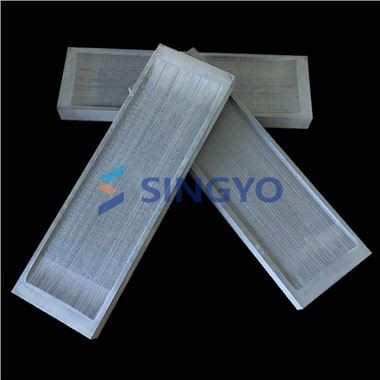
Tungsten Evaporation Boat And Boron Nitride Evaporation Boat
Aug 11, 2023
When it comes to the fabrication of thin films for various applications, the choice of evaporation boats plays an important role in the process. Two commonly used boats are tungsten and boron nitride boats. In this article, we will explore the differences between tungsten evaporation boats and boron nitride evaporation boats and their respective advantages.
Tungsten evaporation boats are made from tungsten metal. They are known for their high melting point, which makes them ideal for use in high-temperature vacuum applications. Tungsten is also highly resistant to thermal shock, which means it can withstand rapid temperature changes without cracking or breaking. Additionally, tungsten boats have a low coefficient of thermal expansion, which means they will not deform or warp during heating and cooling cycles. These properties make tungsten boats ideal for use in the fabrication of metals, alloys, and ceramics.
On the other hand, boron nitride evaporation boats are made from advanced ceramic materials. Boron nitride is a high-performance ceramic with excellent thermal conductivity, high-temperature stability, and chemical inertness. It has a very low coefficient of thermal expansion, which means it will not deform during heating and cooling cycles. Boron nitride boats are ideal for use in the fabrication of metals, alloys, and other reactive materials that require a chemically inert environment.
Compared to tungsten boats, boron nitride boats offer several advantages. First and foremost, boron nitride boats are chemically inert, which means they do not react with the materials being evaporated. This is particularly important when working with reactive metals or alloys, as the boats will not contaminate the thin films. Additionally, boron nitride boats offer exceptional thermal shock resistance, making them ideal for use in high-temperature vacuum processes.
In summary, both tungsten and boron nitride evaporation boats are useful for thin-film fabrication. The choice largely depends on the specific application and material being evaporated. Tungsten boats are ideal for high-temperature vacuum processes and materials that require high thermal shock resistance. Boron nitride boats, on the other hand, offer excellent chemical resistance and thermal shock resistance, making them ideal for use with reactive materials.